
Escape The Algorithm
Talks, workshops, and courses on digital habits and the attention economy
Most conversations about screens and technology leave people feeling anxious, overwhelmed, and unsure what to do about any of it.
This one doesn't.
The problem worth taking seriouslyThe tactics used by technology platforms to capture and hold human attention are not accidental. They are designed, tested, and refined by some of the best-resourced companies in the world. Understanding them isn't a matter of willpower or generational difference. Adults are as susceptible as teenagers, and the evidence is clear on this.
What's less clear, for most people, is what to do with that knowledge.
Escape the Algorithm starts there.
What it is
A talk, workshop, or six-session course that combines global research on digital culture with primary local data — drawn from a survey of over 300 residents of the Bages comarca — to give participants a clearer, better-informed basis for the decisions they make every day about how they use technology. At work, at home, and in the spaces between.
The goal isn't a digital detox. It's better decisions.
For organisationsThe most consistent feedback from participants is about how they felt afterwards.
"It was much needed. I didn't think I could feel hopeful about all this."
The conversation about digital habits inside teams is often either avoided entirely or approached with alarm. Neither is useful. What helps is giving people a framework they can actually apply — one that respects their intelligence, acknowledges the real complexity of the problem, and leaves them with practical tools rather than guilt.
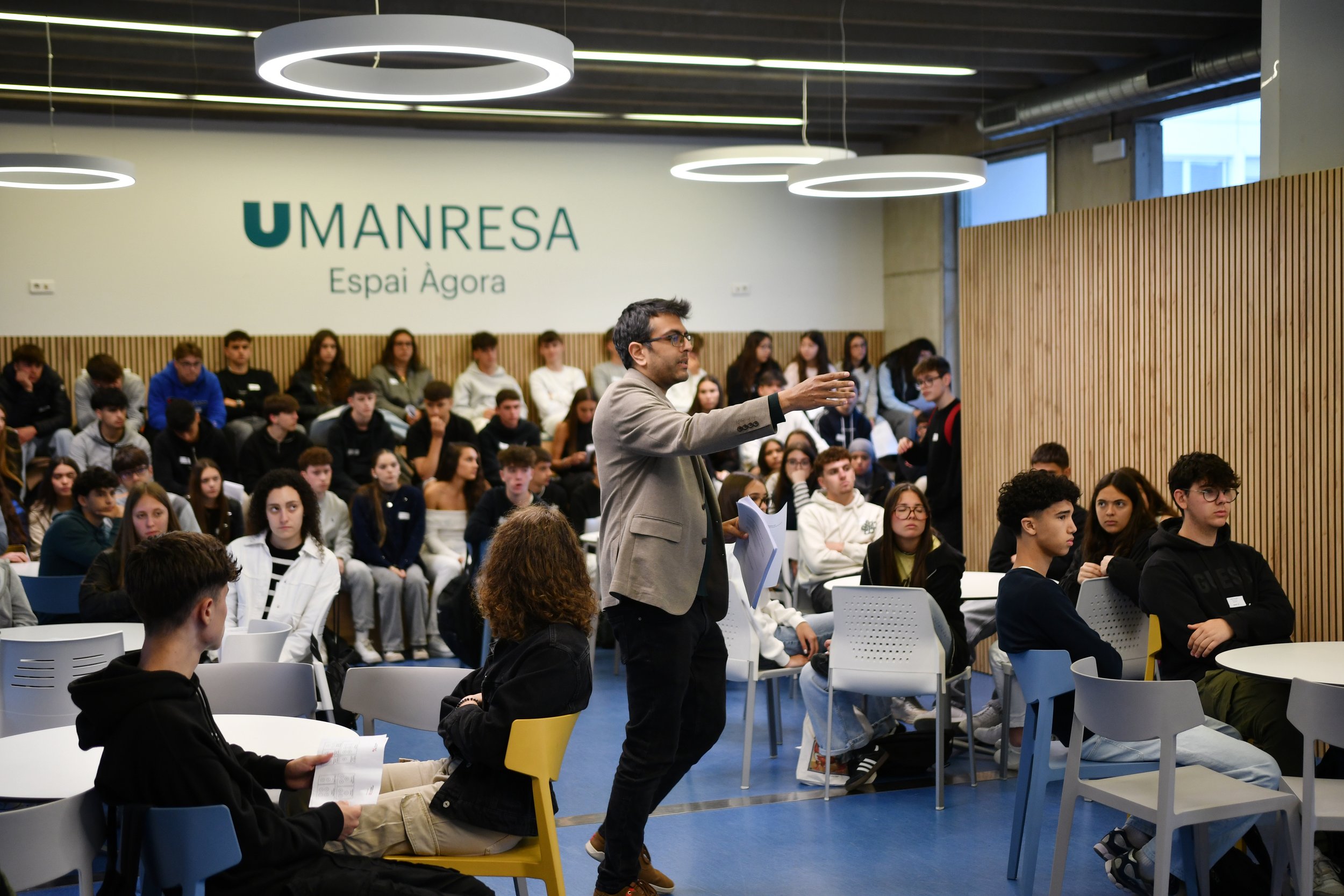
I’ve delivered this work to secondary schools, high-achiever programmes, private business groups, and workshops organised by the local council. The format adapts to the audience. The substance doesn't.
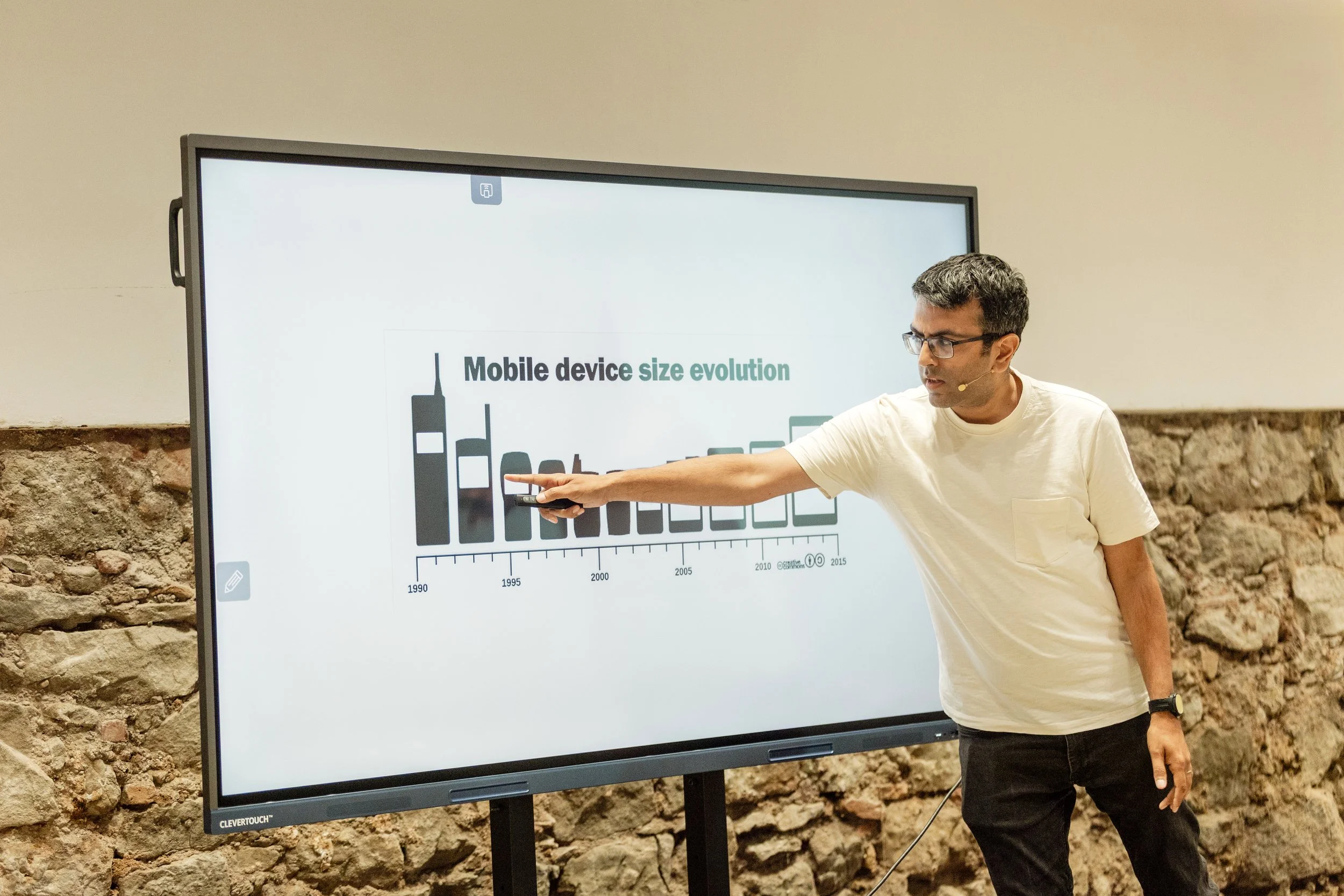
What participants leave with: A clear understanding of how attention is being competed for and why. Historical context that makes current platform behaviour legible rather than baffling. Practical, evidence-based approaches to protecting their own attention and their team's. And a sense that this is a problem with real solutions, not just a cause for concern.
For organisations, the available formats are:
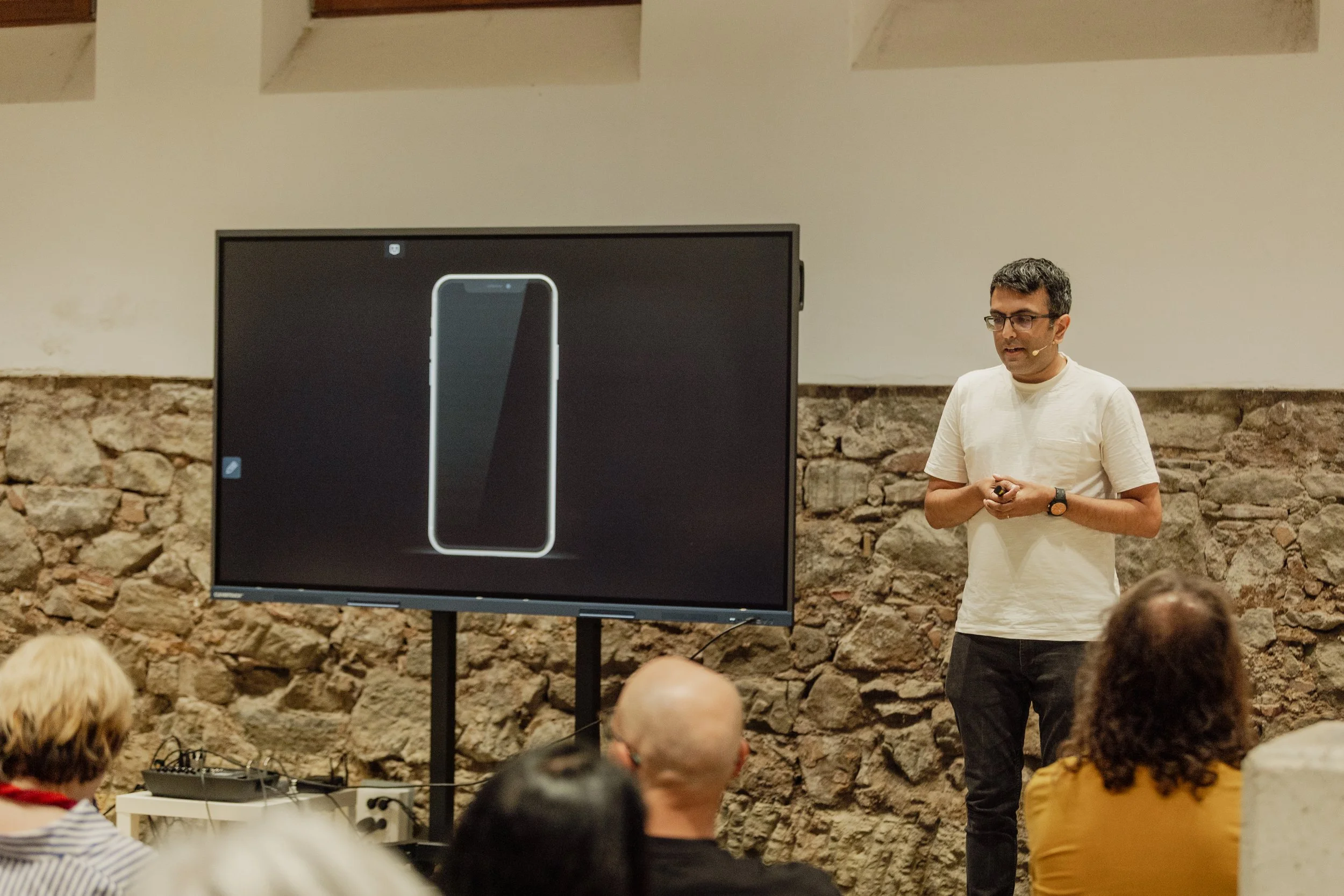
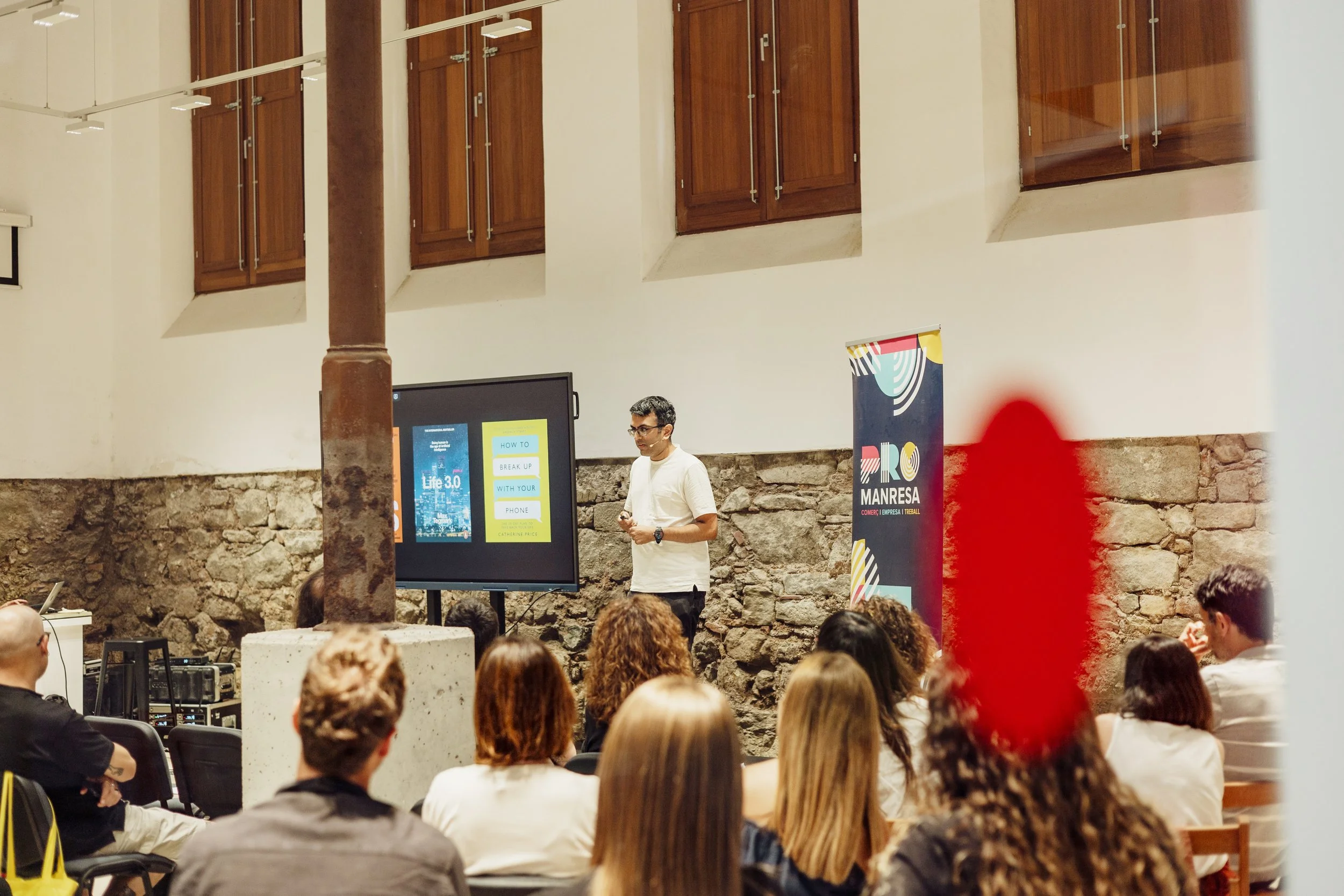
A one-hour talk with time for questions — suitable for team days, cultural programmes, or school sessions.
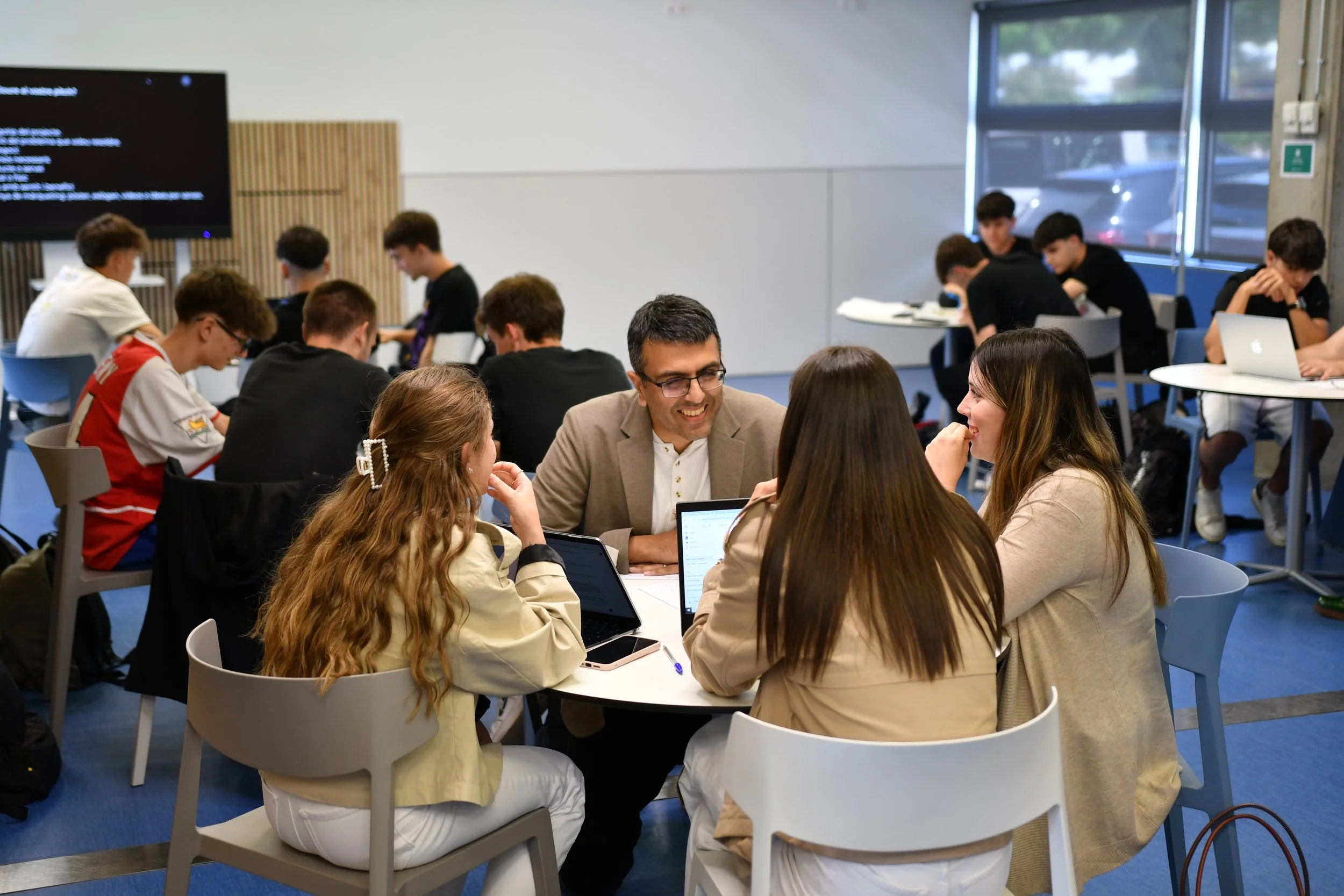
A half-day workshop for deeper engagement.
A six-session course for groups who want to build this thinking into their culture over time.
For individualsThe six-session course covers the full arc of the topic: the history of communications and devices, the evolution of platforms over the last fifteen years, the specific tactics platforms deploy to hold attention, the role of offline life and human connection, and the practical steps individuals and communities can take at home and at work.
Each session is 90 minutes. The next run begins in late April at Moma Espai Cultural in Manresa.
The research behind itIn early 2026, I conducted a primary survey of digital habits among residents of the Bages comarca — now with over 300 responses. The data covers screen time patterns, platform usage, self-reported impact on relationships and focus, and awareness of algorithmic design.
Combined with global research from sources including the World Happiness Report and leading researchers in attention economics and digital culture, this gives the talk and course a grounding that is both internationally informed and locally specific — a combination that consistently produces the most useful conversations.
Why I do thisI’ve lived in cities and in rural areas. Worked inside multinationals and small teams. Formed my own family. Built my own business. Taught in classrooms. Watched platforms change over fifteen years of working in digital content — and made deliberate choices about how to use them, and how not to.
I don't teach this from the outside. I teach it from inside a life where these decisions are made every day, with the same pressures and constraints my audiences face.
My background in teaching means the material is designed to be absorbed, whilst respecting human attention.
Speaking and mediaI’m available for keynotes, panel contributions, and media appearances on digital culture, the attention economy, and wellbeing in the digital age. I have appeared on TV, tech event stages, and delivered sessions to diverse audiences across Catalonia.